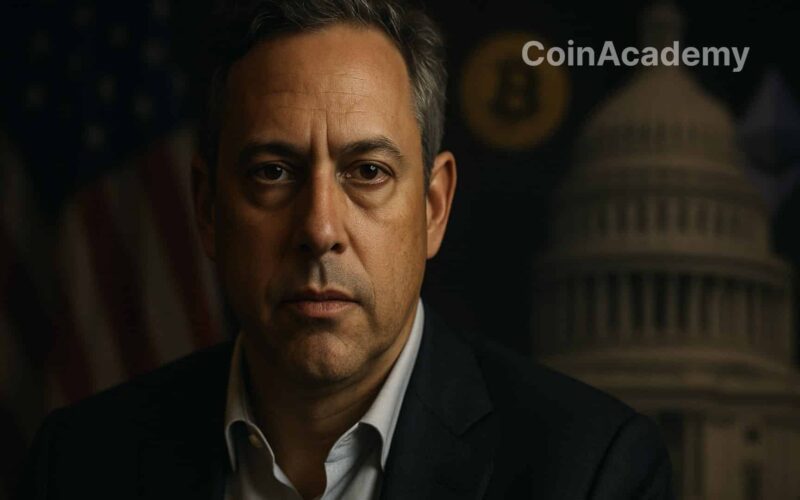
The White House is facing a new crypto controversy. David Sacks, a special advisor to Donald Trump on AI and crypto issues, has hit back at the New York Times following the publication of an article detailing potential conflicts of interest related to his personal investments. According to Sacks, the piece is just a collection of anecdotes unable to support its central accusation.
A Sensitive Role and a Fortune Exposed to AI and Crypto Sectors
Former tech entrepreneur turned investor, Sacks is a co-founder of the Craft Ventures fund. Before joining the government, he and Craft had sold over $200 million in crypto assets or assets related to digital assets, of which at least $85 million went to him personally. But he still holds illiquid stakes in sector companies.
According to the Times investigation, his financial disclosure lists 708 technology investments, including 449 in AI and 20 in crypto. Positions that, according to the newspaper, could benefit from the policies he supports in Washington. Among the examples cited, Craft’s stake in BitGo, a crypto infrastructure provider and stablecoin-as-a-service solution provider. BitGo filed for its IPO in September, with Craft credited with 7.8% of the capital.
The Times also notes that Sacks supported the GENIUS Act, the major stablecoin regulation law passed this year, seen as favorable to institutional adoption.
Sacks Accuses NYT of Manipulation
Sacks responded on X by calling it a “nothing burger.” He claims to have “dismantled in detail” the newspaper’s arguments over the past five months and accuses the Times of deciding to publish a narrative “that doesn’t hold water.” He shared the letter from his lawyers, accusing the publisher of trying to produce a “hit piece” and ignoring the facts to force a biased narrative.
For Sacks’ team, all special government employee obligations have been met. His spokesperson emphasizes that the Office of Government Ethics requires him to divest certain asset categories, but not all of his technology positions.
A Limited and Strictly Regulated Role?
The SGE status restricts his activity time to 130 days. Democratic lawmakers expressed concerns in September about a potential overrun, but Sacks claims to manage this quota precisely to stay within legal limits.
This controversy comes at a time when political influence over AI and crypto is scrutinized more than ever. For now, Sacks stands firm: the New York Times’ article is more of an attempt to manufacture a scandal than an investigation. It remains to be seen if Washington will also see it as a mere “nothing burger.”