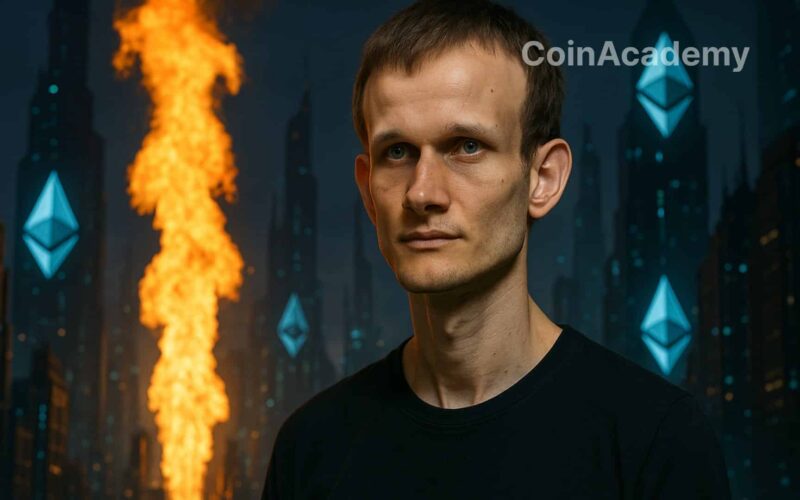
Vitalik Buterin wants to tackle one of Ethereum’s historical irritants: the unpredictable transaction fees. The blockchain co-founder has proposed the creation of a fully onchain futures market allowing users and developers to hedge against future gas changes. An ambitious idea, but one that is already raising serious doubts within the ecosystem.
A native hedging to smooth out fee uncertainty
In a post published on X, Vitalik explains that many users are wondering if the recent low fees can last. Despite the throughput improvements and congestion reductions after the latest updates, including Fusaka and the increase in the block gas limit to 60 million, concerns persist.
The idea: create a futures market on the basefee, a true congestion barometer. Users could pre-purchase a volume of gas for a given period, thereby protecting themselves from future spikes. At the same time, this market would act as a clear indicator of market expectations for future fees, a tool that is currently missing despite technical advances.
First obstacle: “nobody is naturally short gas”
The sharpest criticism came from Hasu, a strategist at Flashbots. For him, this market cannot work because it lacks a crucial element: a natural short side. Many actors are “short gas“, they consume gas and would like to hedge, but no one has a structural economic interest in being long gas.
Without counterparties, there is no market. At best, some opportunistic speculation, but not enough depth to absorb significant volumes.
Vitalik then suggested that “the protocol be shorted“, through an onchain auction of rights on the basefee for a gas quota per block. A way to shift some risk to Ethereum’s protocol-level economics. But Hasu believes that this moves the problem more than it solves it: bidders would pay most of the value to the protocol, only buy if they anticipate a rise and, again, not create real selling pressure.
The burn mechanism, a major complication
Martin Koppelmann, co-founder of Gnosis, added a crucial point: the EIP-1559 mechanism, which burns part of the fees, makes the concept structurally more complex. Without burn, validators would have been natural sellers of coverage. With the burn, potential sellers must assume much more risk and will charge a high premium, which risks killing the market in its infancy.
Vitalik maintains that such a mechanism would allow the protocol to move closer to a neutral position and users to hedge effectively. But even proponents of onchain economic research acknowledge that designing a deep and trustless gas market clashes with the nature of Ethereum post-EIP-1559.
A debate that is part of an accelerated innovation phase
This proposal comes as Ethereum research enters an unprecedented intensity phase: biannual hard forks, increased throughput, new frameworks like Kohaku for privacy, and the rediscovery of DeFi’s role as long-term savings.
The question now is: can Ethereum create a native derivative market on one of its own fundamental parameters without breaking its economic incentives? The discussion is just beginning, and it could redefine how fees are perceived, anticipated, and managed on one of the world’s most used networks.